
How It Works
your song, intro to codaHow It Works

Mixing has a reputation for being a mysterious black box wielded by wizards fond of “incense.” It isn’t.
Here’s the whole thing, start to finish.
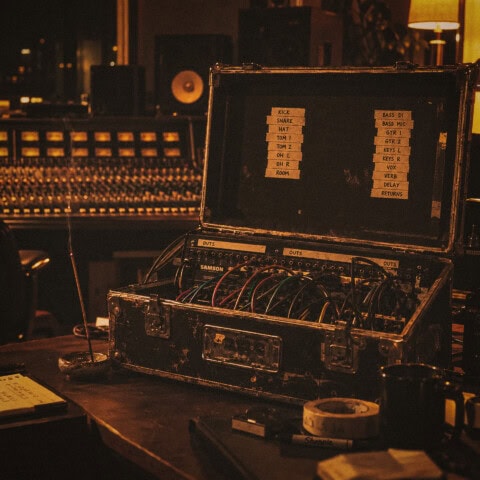
Four steps, in and out of the box. No mystery.




1. Send your stems.
Export each part of your song as its own file—lead vocal, harmonies, bass, that one synth over there—and upload them through the link we send. No perfect room required. Never exported stems before? We’ll send a one-page cheat sheet for whatever software you use.
2. The First Read.
Knobs come second. Before anyone touches a fader, we read the song: what it’s reaching for, where it should ache, what you were feeling at 2:22 a.m. when you tracked the take. You can’t hear it that way anymore. That’s exactly why you brought in an outside ear.
3. We mix.
Now the craft. We balance the parts, carve frequency space so nothing clutters, shape the low end, and set the vocal riding on top as if it were born there. Then we make sure the whole thing holds up from a phone speaker to a club rig. Modern tools, vintage iron, and decades of asking “Why does this work?”—all of it pointed at your record.
4. You hear it. Then we tweak it.
Vocal louder? Bass meaner? Say the word by email, phone, or Zoom. Revisions are built in, because the only opinion that ultimately matters is yours.
The first mix is a conversation, not a verdict.
Need it mastered, too?
We can take it all the way to release-ready or hand it off to a mastering engineer you already trust. There’s a plain-English breakdown of the difference on our FAQ page (Q&A #9).
A little history, since we’re here.
“The box” dates to the early ’90s.
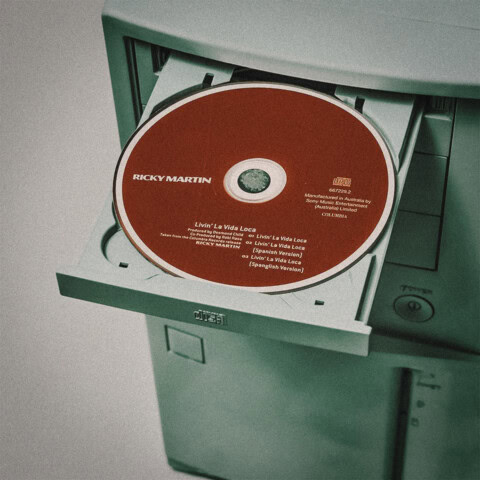
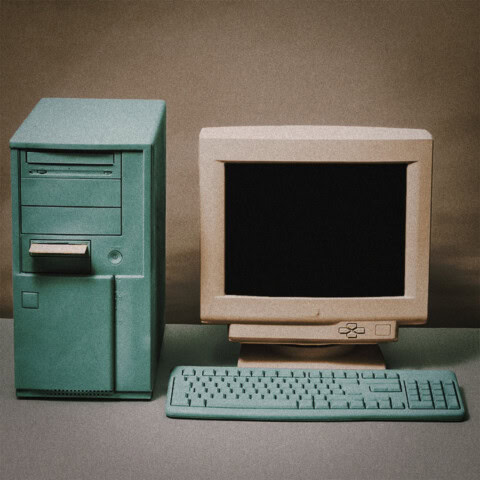
Around 1993, desktop computers—the beige ones, or in Miami the aqua ones—finally got powerful enough to handle serious audio. The watershed arrived in 1999, when Ricky Martin’s “Livin’ la Vida Loca” became the first number-one single recorded, edited, and mixed entirely in Pro Tools, inside the box from top to bottom, at The Gentlemen’s Club studio in Miami, Florida. Produced by Desmond Child and Draco Rosa and mixed by Charles Dye, it quietly kicked the door open for the all-digital workflow nearly all of pop runs on today. Not bad for four minutes and three seconds of beautiful chaos.

And by the way…
Speaking of boxes, there’s a literal one at the center of how a mix gets made. Working entirely inside the computer is what engineers call mixing “in the box” (ITB): the whole record lives in a digital audio workstation (DAW) stocked with premium plugins, rather than out in the room on a physical console and racks of analog compressors. Most studios plant a flag on one side. We don’t. We run both—the surgical precision and instant recall of software, alongside the weight and happy accidents that only real analog iron gives you. The result tends to sound modern and vintage at the same time, which, not by accident, is usually what your song was reaching for.